A society for people who wanted to do the work, not read about it
The Bristol Trading Society is the largest markets-focused society at the University of Bristol, built around how markets move, how they are traded, and how the people who trade them actually think. We are run entirely by students, for students.
How it started
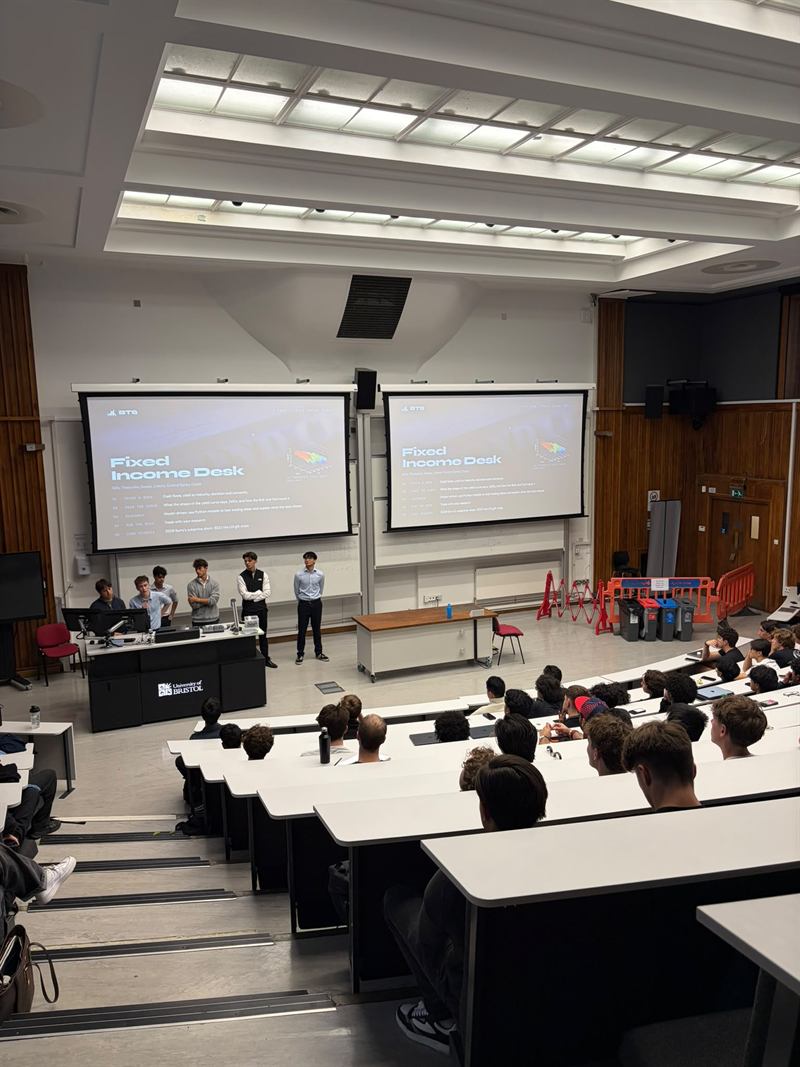
BTS was founded in 2017 by Pratik Popat, then a Bristol student. It has been run by students every year since, with the whole committee turning over as each cohort graduates.
The divisions have not stayed still. The line-up has been rebuilt several times as markets and member interest shifted — cryptocurrency and derivatives have both run as standalone divisions in past years. What gets researched is decided by what members actually want to work on, not by a fixed structure inherited from whoever ran it last.
Today it runs four — FICC, Equities, Macro and Quant — split across thirteen teams, each with its own research agenda and division heads.
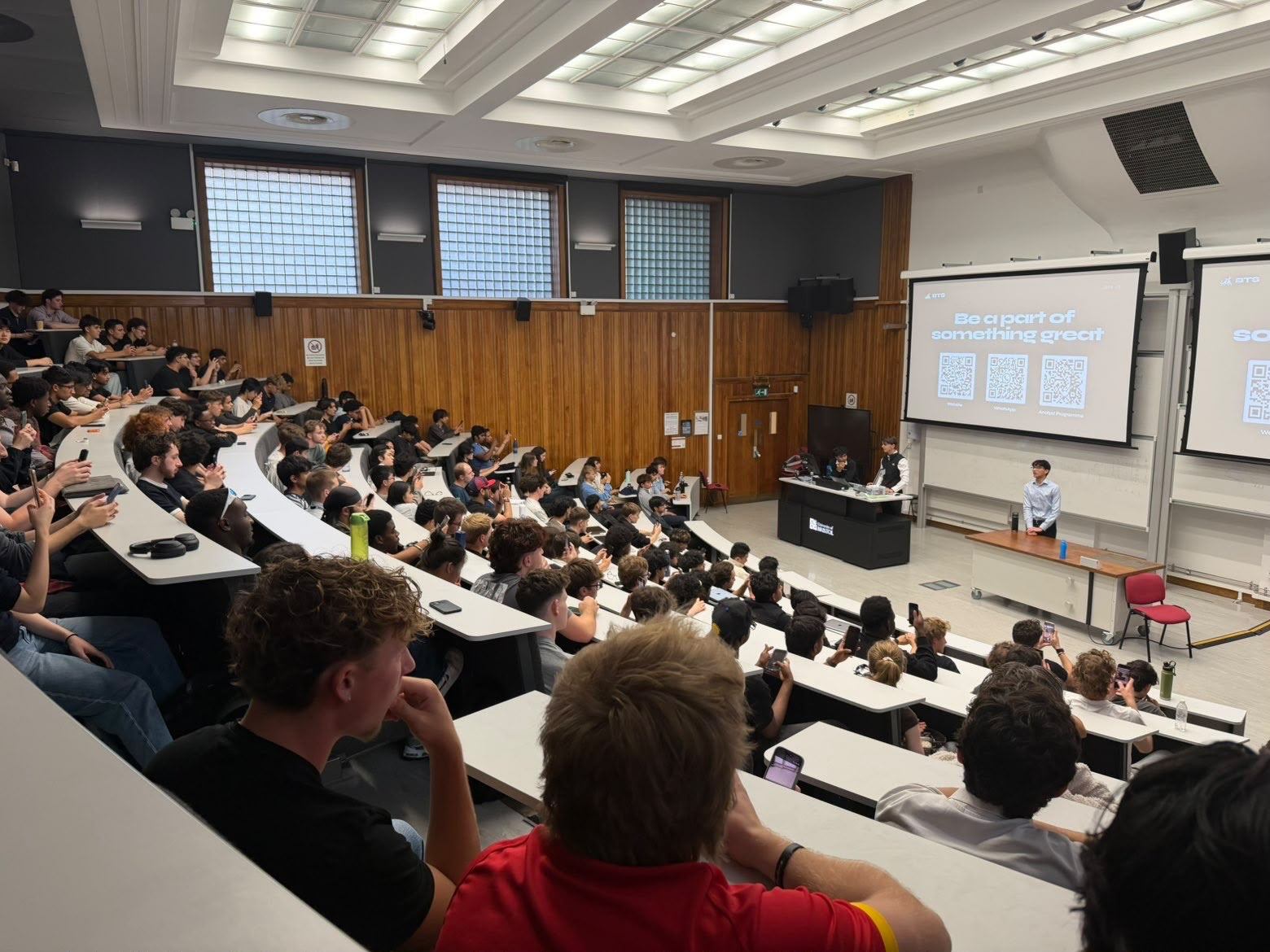
The analyst programme has become the hardest part of the society to get into. It now draws over 400 applications a year for 60 places in total — and it is the reason firms recruit from the cohort directly.
How the society works
-
Membership
Open to any Bristol student, whatever you study and whatever you know. Members get the speaker events, the workshops, the Bloomberg sessions and the socials. Most people start here and a lot of people stay here — that is a perfectly good way to use the society.
-
The analyst programme
Over 400 applications a year for 60 places in total. Analysts join one team and spend the year producing research inside it — building a view, writing it up, and defending it. This is the part of the society that most closely resembles the job, and the reason firms recruit from the cohort.
-
Division heads
Each division is run by a head who sets its research agenda, runs its sessions and is accountable for what the division produces across the year. Heads are appointed by application, usually from analysts who have already done a year in the division.
-
The committee
Runs the society itself — events, partnerships, finances and everything that keeps it working.
Mentorship
Breaking into trading or investment banking is mostly an information problem. The people a year or two ahead of you know which applications open when, what an online assessment actually tests, and how a superday runs — and that knowledge does not appear in any prospectus.
So we pair them up. Members who have secured spring weeks, summer internships, off-cycles and graduate roles mentor members who are just starting out — on applications, interviews, and what the work is really like.
It is student to student and free, but places are limited and allocated by application. We look for members who are serious about the industry and will engage properly with both the programme and the society. Places are not permanent: members who stop engaging make way for those who will.
Three things we actually care about
Produce, don’t spectate
Reading about markets is easy and teaches you very little. Everything we run ends in someone having to produce something — a pitch, a position, a written view — and then stand behind it.
Be wrong in public
Our competitions and debates are adversarial on purpose. The point is not to win; it is to have your reasoning taken apart by someone who knows more than you, early enough for it to be useful.
No prior knowledge required
Members arrive from every degree, including ones with no finance in them at all. The entry point is curiosity and the willingness to do the reading — not a CV that already looks the part.